Creation &
building
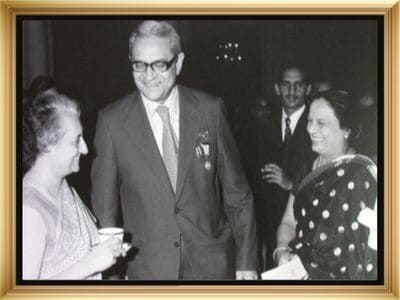
The year 1978 remains etched in the collective memory of the Bombay Orthopaedic Society. It was the year when one of its own, Dr. K. T. Dholakia, ascended to the distinguished office of President of the Société Internationale de Chirurgie Orthopédique et de Traumatologie (SICOT). For every member of the Society, his achievement was not merely a personal milestone; it was a moment of national pride, a reflection of how far Indian orthopaedics had come, and a testament to the quiet determination of a generation that built with vision and conviction.
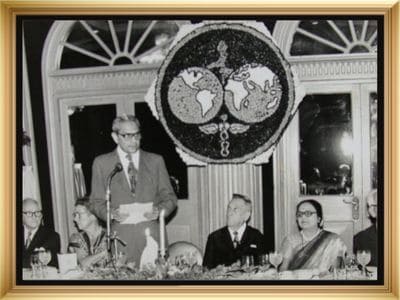
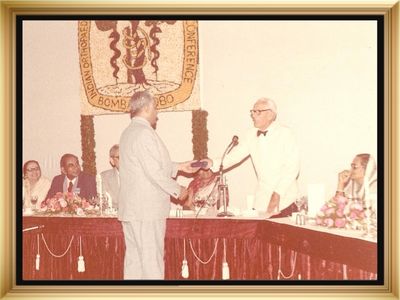
At the felicitation ceremony held in his honour, the hall resonated with admiration and affection. In that warm gathering of peers, colleagues, and students, a simple yet profound idea took root; to create a lasting tribute to Dr. Dholakia’s commitment to learning and science. Thus, was born the K. T. Dholakia Lecture, to be delivered every alternate year on a subject rooted in the basic sciences related to orthopaedic surgery.
It was more than an academic gesture; it was a symbol of respect, gratitude, and posterity. With this, WIROC evolved beyond being just a conference; it became a tradition; one that celebrated wisdom, mentorship, and the spirit of unity.
Through the years, the Dholakia Lecture has come to represent what WIROC truly stands for - a blend of science and soul, intellect and inspiration, where every session carries the echoes of those who dreamed big and paved the way for generations to follow.
The Silver Jubilee Conference - 1980
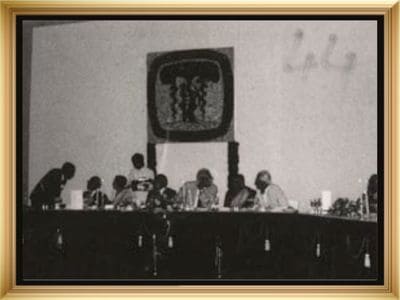
September 1980 remains a landmark year in the history of the Bombay Orthopaedic Society. It was then that the Society hosted the Silver Jubilee Conference of the Indian Orthopaedic Association (IOA); an event that would forever change the landscape of orthopaedic meetings in India.
In those days, the IOA annual meetings were modest gatherings, decided quietly at the AGM by a handful of senior members, with little fanfare or competition for hosting. Though as many as seven BOS members had served as IOA Presidents, none had brought the meeting to Mumbai. That changed when Dr. L. N. Vora, with his characteristic foresight and determination, extended an invitation to host the Silver Jubilee conference in the city. The responsibility was his and his alone and he embraced it with meticulous precision.
Dr. Vora was a master planner. Within days, every detail had taken shape - the venue, delegate accommodation, transport, academic programme, and even entertainment were perfectly mapped out. The chosen venue was none other than the iconic Taj Mahal Palace Hotel, standing proudly by the Gateway of India, a fitting symbol of elegance for such a historic occasion.
The scientific programme was of an unprecedented calibre, featuring legendary names such as Maurice Müller, Merle d’Aubigné, Michael Wroblewski, W. J. W. Sharrard, and C. S. Ranawat. For the first time, Indian orthopaedics witnessed an event that matched international standards, in both science and sophistication.
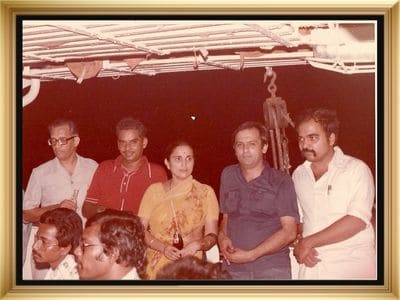
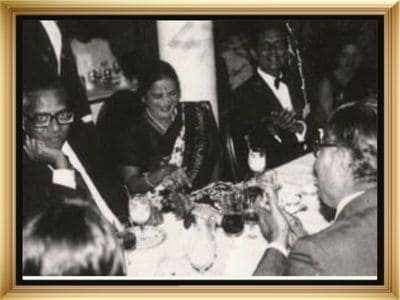
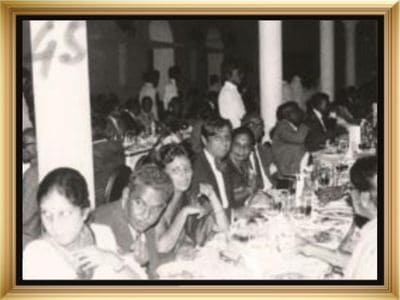
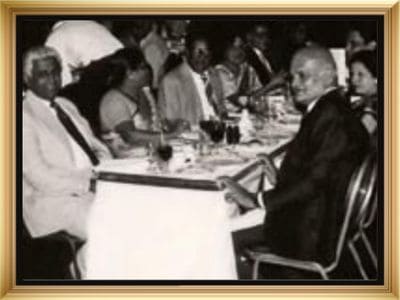
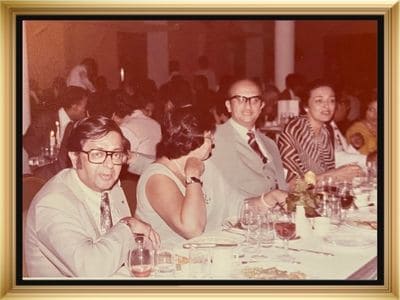
After days rich in academic exchange, evenings unfolded in the classic charm of Bombay. Delegates enjoyed a harbour cruise, serenaded by live music, with exquisite food and warm camaraderie. The Silver Jubilee dinner at the Taj was a regal sit-down affair, elegantly served by liveried waiters, attended by impeccably dressed guests, and graced by the presence and participation of the members’ wives, who played a vital role in orchestrating the social events.
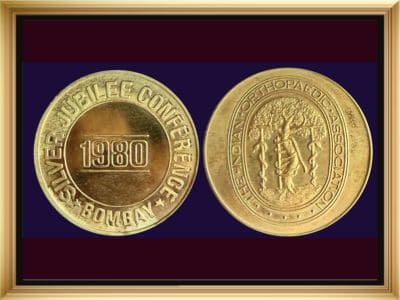
Each delegate carried home not just memories, but also a silver coin specially struck to mark the occasion a token that came to symbolise a milestone moment in Indian orthopaedic history.
The 1980 Silver Jubilee Conference did more than celebrate a milestone; it transformed the very ethos of orthopaedic meetings in India. It set a new benchmark in organisation, academic excellence, and hospitality, one that continues to inspire every WIROC and IOA conference even today.
 A
Chapter
A
Chapter
framed in memories
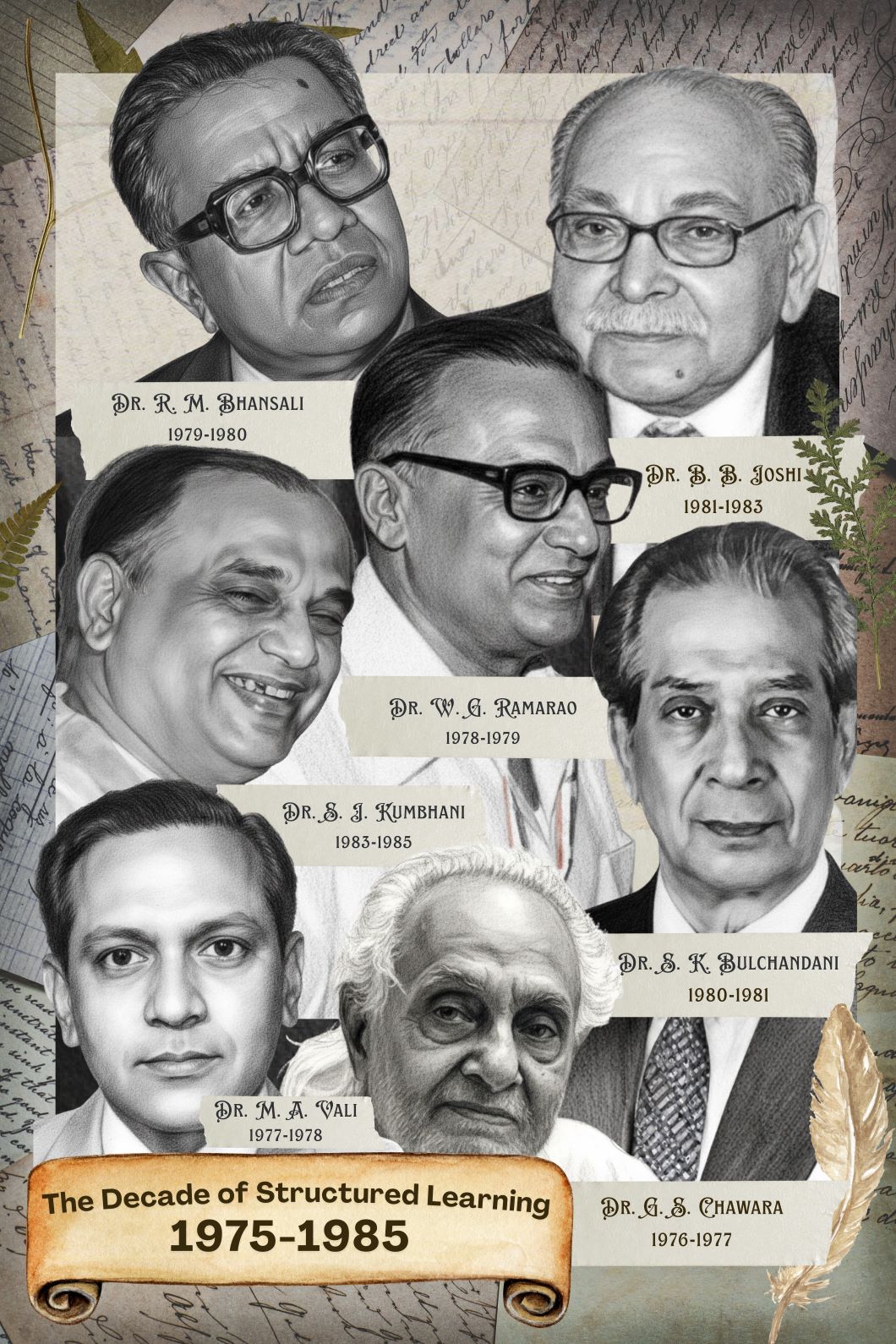
1976
A Phase of Organised Advancement
Dr. G.S.Chawara Rebuilds BOS’s Academic Momentum
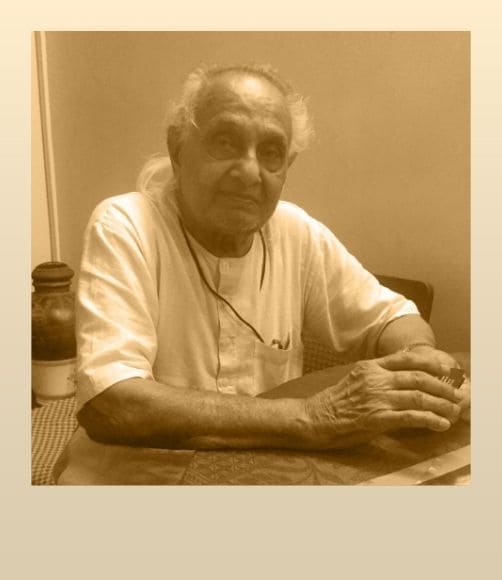
Dr. G. S. Chawara
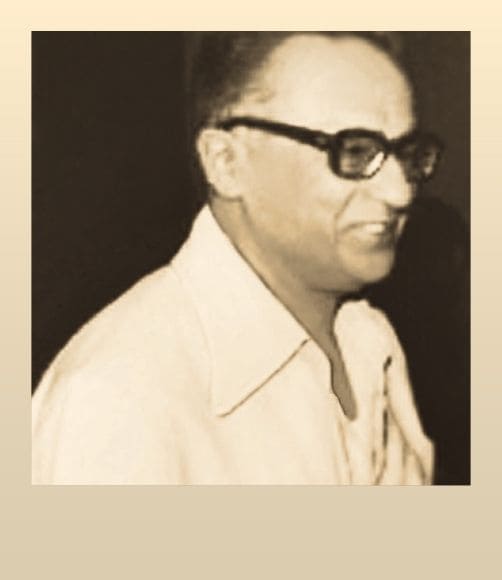
Dr. W. G. Rama Rao
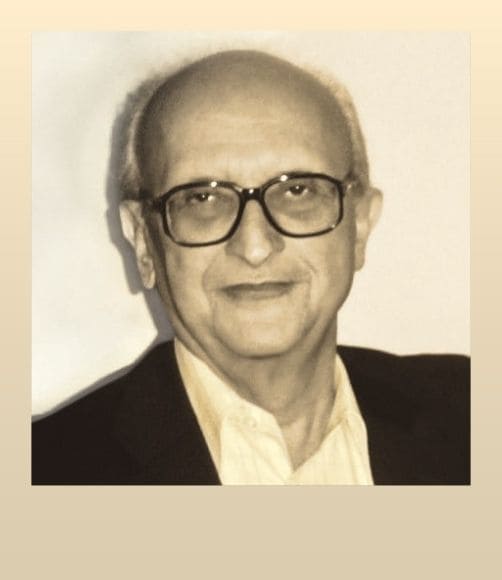
Dr. J. C. Taraporvala

Dr. C. A. Talwalkar
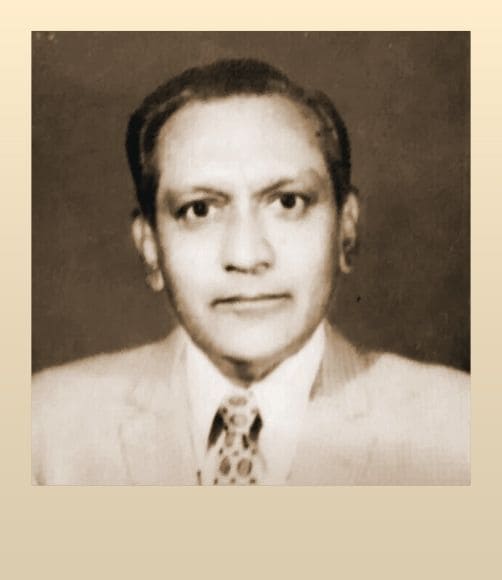
Dr. M. A. Vali
Wiroc

21
November 1976

Century Bazar
Auditorium Worli Mumbai
Dr. W. G. Rama Rao
R. J. KATRAK ORATION
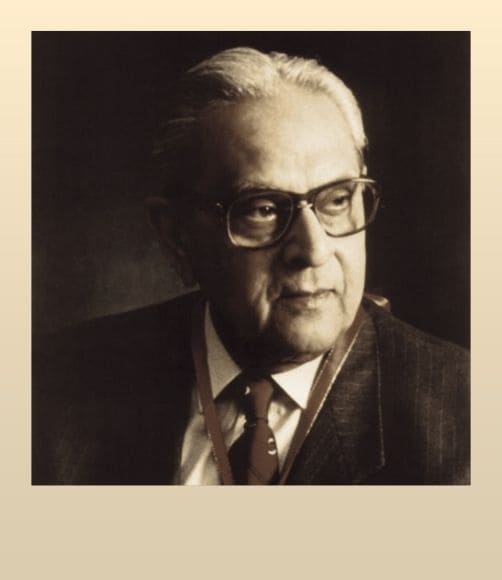
Dr. K. T. Dholakia
K. S. Masalawala
BEST PAPER AWARD
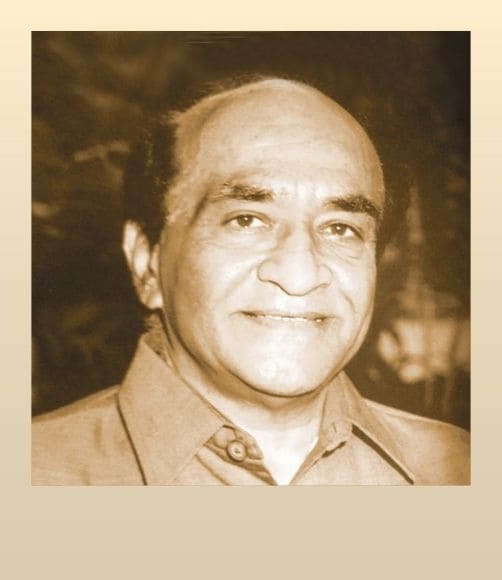
Dr. B. R. Patel
1977
Foundation for Future Growth
Dr. M. A. Vali Reinforces BOS’s Organisational Base
Dr. M. A. Vali
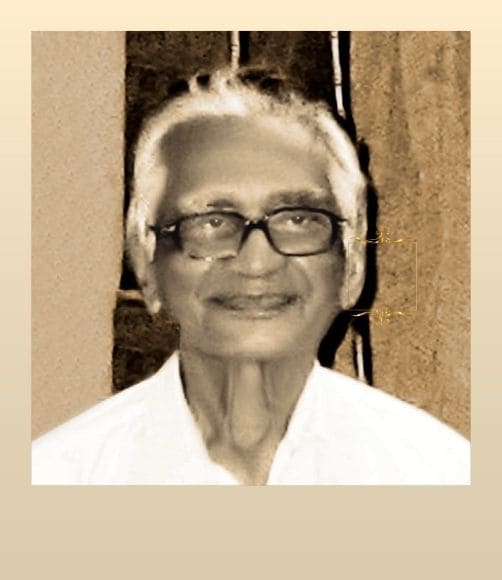
Dr. C. G. Pradhan
Dr. J. C. Taraporvala
Dr. C. A. Talwalkar
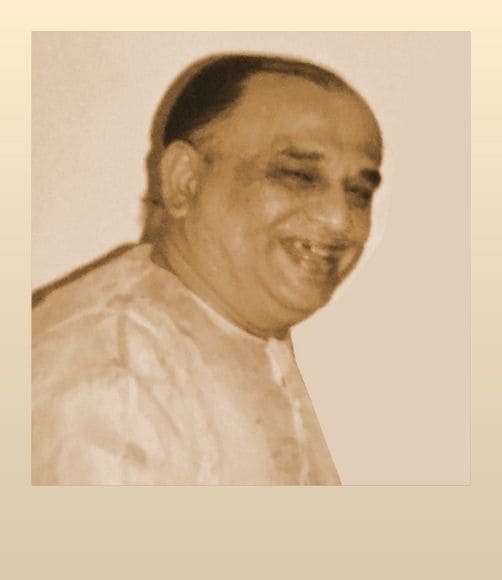
Dr. S. J. Kumbhani
Wiroc
23 - 24
November 1977
200
ATTENDED
Birla Matushri
Hall, Mumbai
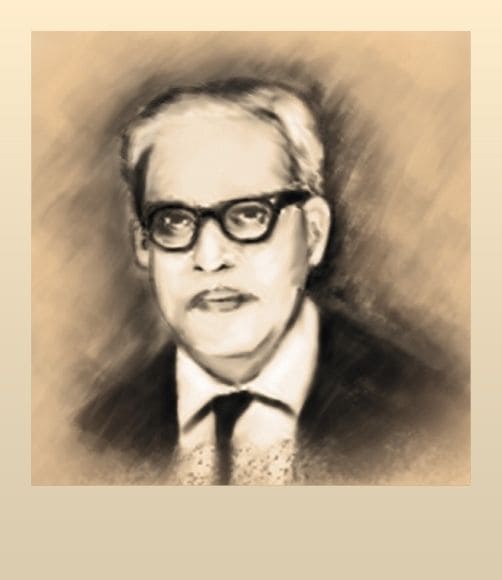
Dr. K. S. Masalawala
R. J. KATRAK ORATION
Dr. M. L. Chatterjee
1978
Modernising Orthopaedic Dialogue
Dr. W. G. Rama Rao Advances Educational Standards
Dr. W. G. Rama Rao
Dr. C. G. Pradhan
Dr. P. D. Hakim
Dr. C. A. Talwalkar
Dr. S. J. Kumbhani
Wiroc
12
November 1978
45
ATTENDED
IMA Hall,
Nashik
Dr. J. Y. Shukla
R. J. KATRAK
ORATION
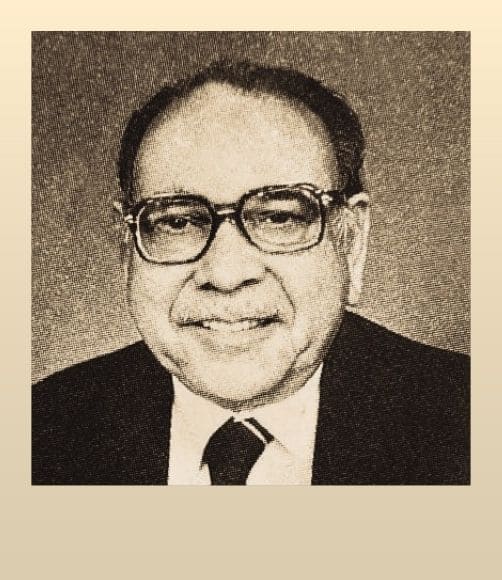
Dr. B. B. Joshi
K. S. Masalawala
BEST PAPER AWARD
Dr. Shrenik Shah
1979
A Decade of Academic Maturity
Dr. R. M. Bhansali Returns to Strengthen BOS’s Vision
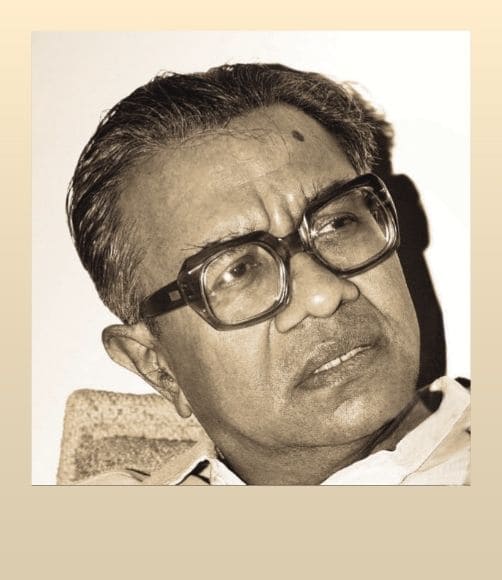
Dr. R. M. Bhansali
Dr. C. G. Pradhan
Dr. P. D. Hakim
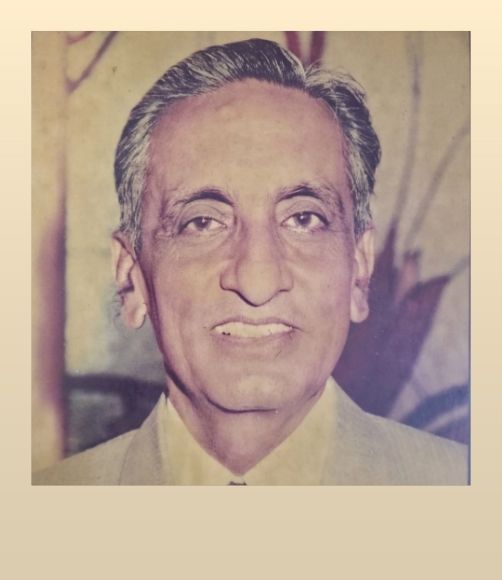
Dr. S. D. Mehta
Dr. S. J. Kumbhani
Wiroc
18
November 1979
64
ATTENDED
Century Bazar
Auditorium Worli Mumbai
Dr. C. G. Pradhan
K. T. DHOLAKIA
ORATION
Dr. K. Dastur
R. J. KATRAK ORATION
Dr. B. Sankaran
K. S. Masalawala
BEST PAPER AWARD
Dr. D. G. Vora
1980
Expanding Influence and Ideals
Dr. S. K. Bulchandani Drives Deeper Professional Engagement
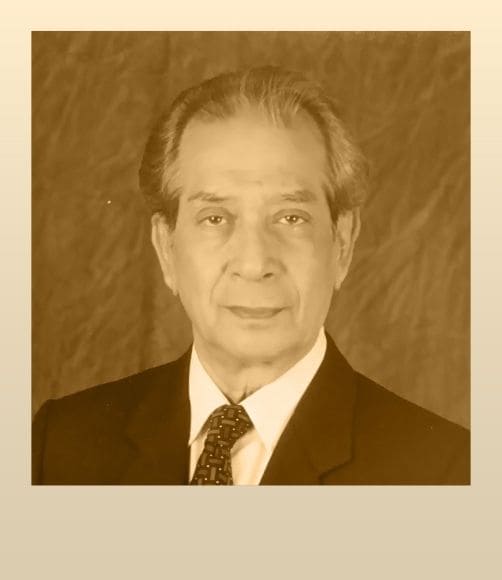
Dr. S. K. Bulchandani
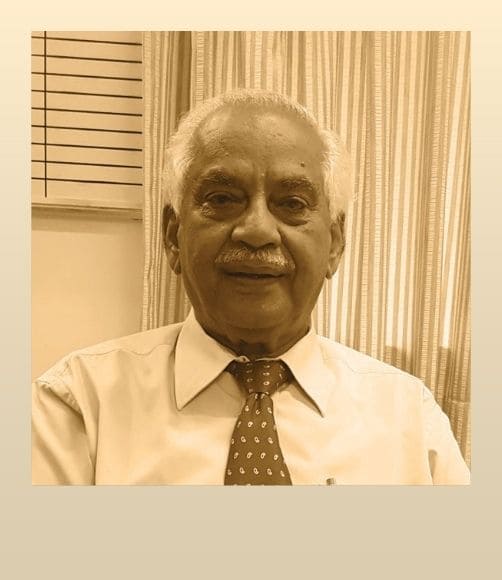
Dr. N. S. Laud
Dr. P. D. Hakim
Dr. A. M. Mody
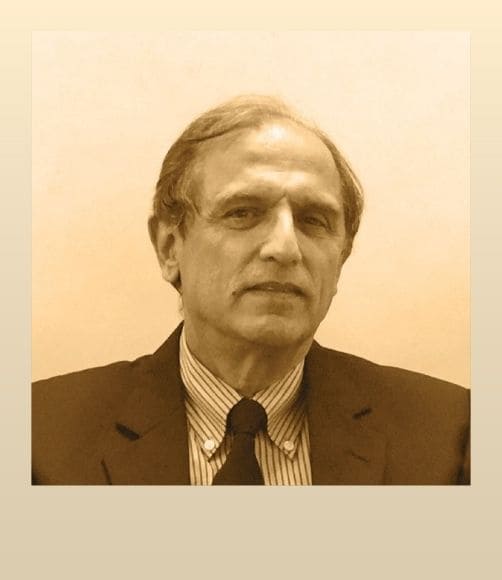
Dr. A. J. Thakur
Wiroc
23
November 1980
80
ATTENDED
Mahavir General
Hospital, Surat
Col. M. D. Vashi
R. J. KATRAK ORATION
Dr. G. V. Merchant
K. S. Masalawala
BEST PAPER AWARD
Dr. Pankaj Divetia
1981
A Phase of Organised Development
Dr. B. B. Joshi Rebuilds BOS’s Academic Momentum
Dr. B. B. Joshi
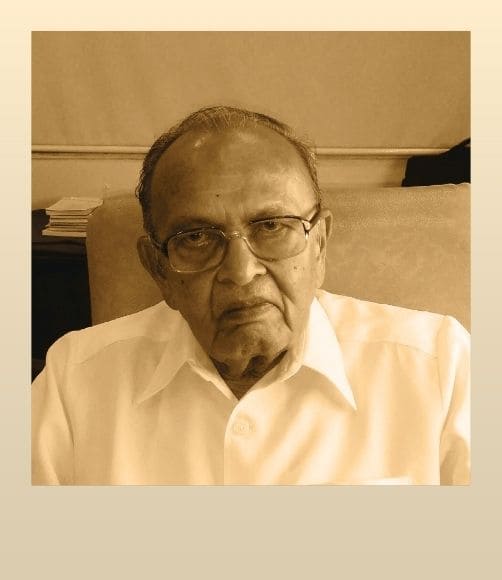
Dr. P. H. Vora
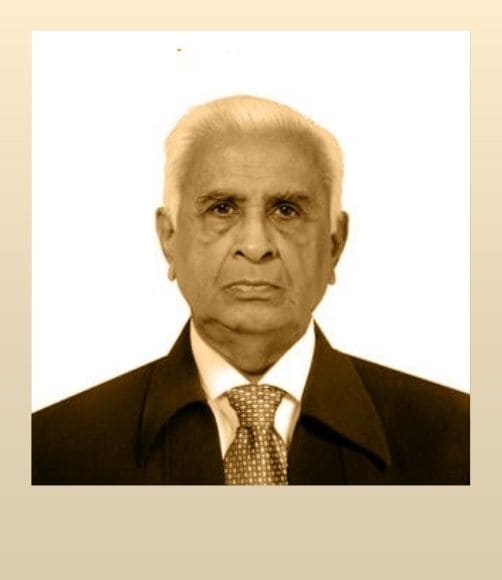
Dr. L. N. Vora
Dr. A. M. Mody
Dr. A. J. Thakur
Wiroc
29
November 1981
100
ATTENDED
Hotel Sea
Rock Mumbai
Dr. P. H. Vora
K. T. DHOLAKIA
ORATION
Prof. Manik Sahani
R. J. KATRAK ORATION
T.K.Shanmugasundaram
K. S. Masalawala
BEST PAPER AWARD
Dr. S. Agarwala
1982
Building Collaborative Strength
Dr. B. B. Joshi Leads a Year of Collective Growth
Dr. B. B. Joshi
Dr. P. H. Vora
Dr. L. N. Vora
Dr. A. M. Mody
Dr. A. J. Thakur
Wiroc
05
December 1982
Ahmedabad
Dr. Prabodh Desai
R. J. KATRAK ORATION
Dr. M. T. Mehta
K. S. Masalawala
BEST PAPER AWARD
Dr. Kirit Shah
1983
A Year of Enhanced Academic Dialogue
Dr. S. J. Kumbhani Sharpens Scientific Exchange
Dr. S. J. Kumbhani
Dr. P. H. Vora
Dr. L. N. Vora
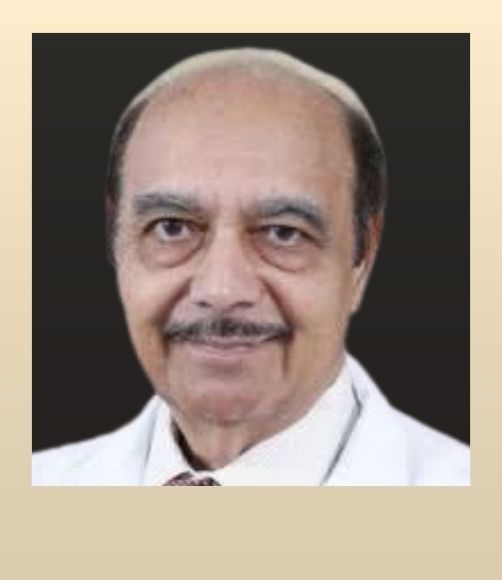
Dr. V. Y. Gawande
Dr. C. G. Pradhan
Wiroc
20
November 1983
Thane
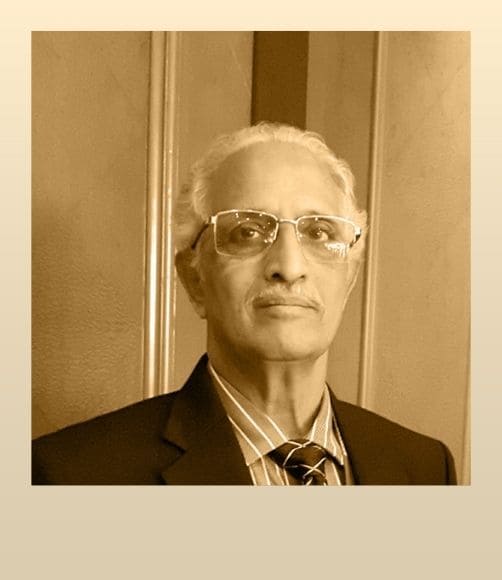
Dr. V. T. Ingalhalikar
K. T. DHOLAKIA
ORATION
Dr. Lustues D'Souza
R. J. KATRAK ORATION
Prof. Tuli
1984
Professional Synergy Strengthens
Dr. S. J. Kumbhani Advances BOS’s Educational Platforms
Dr. S. J. Kumbhani
Dr. A. J. Thakur
Dr. V. Y. Gawande
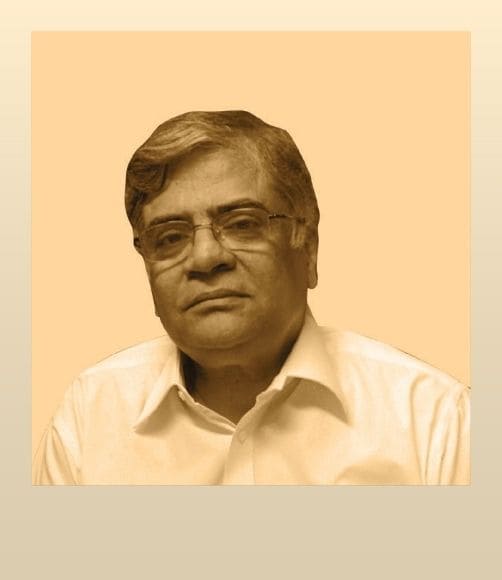
Dr. S. K. Sabnis
Dr. C. G. Pradhan
Wiroc
24 - 25
November 1984
Solapur
Dr. V. M. Iyer
K. T. DHOLAKIA
ORATION
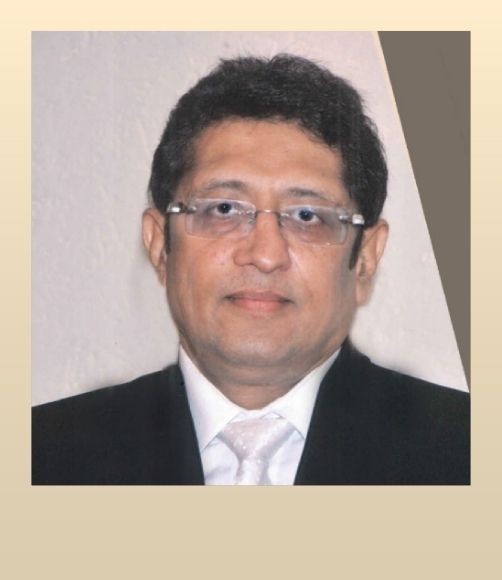
Dr. Prasham N. Shah
R. J. KATRAK ORATION
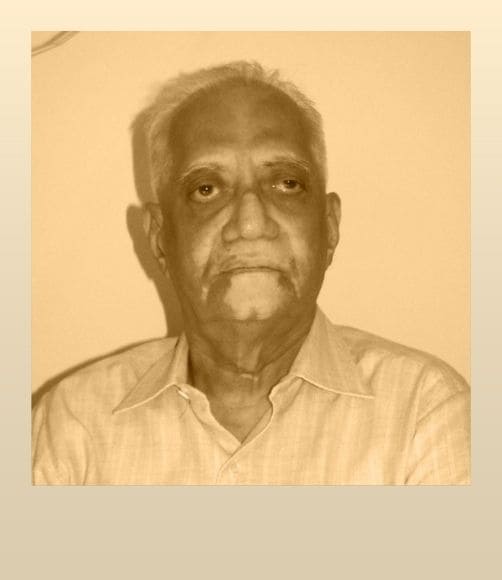
Dr. K. V. Chaubal
1985
Pushing Academic Boundaries
Dr. K. V. Chaubal Leads BOS Into a Modern Era
Dr. K. V. Chaubal
Dr. A. J. Thakur
Dr. V. Y. Gawande
Dr. S. K. Sabnis
Dr. C. G. Pradhan
Wiroc
07 - 08
December 1985
Hotel Centaur,
Airport
Dr. A. J. Thakur
Dr. S. K. Sabnis
K. T. DHOLAKIA
ORATION
Dr. Lata Mehta
R. J. KATRAK ORATION
Dr. P. S. Maini
K. S. Masalawala
BEST PAPER AWARD
Dr. Dereck D'Lima
Visual
traces
of the heritage